Advantages and Limits of Different Viscosity Measurement Techniques

Viscosity measurement is a cornerstone of process control and product development across industries such as paint, petrochemicals, food, pharmaceuticals, cosmetics, and polymer manufacturing. This paper reviews and compares the main techniques used to characterize fluid viscosity, with an emphasis on their industrial relevance. Capillary, falling ball, rotational, vibrational, and oscillatory methods are analyzed in terms of measurement principle, applicability, advantages, and operational limitations. Particular attention is given to how these methods support specific industrial needs. While no single method suits all fluids, the complementary use of multiple techniques allows laboratories to achieve both regulatory compliance and deep insight into flow behavior. This comparative analysis highlights the growing integration of rheological measurement in modern production systems, ensuring optimized performance and quality consistency across applications.
Different methods to control viscosity
1. Capillary / Ubbelohde / Ostwald Viscometers
Capillary viscometers, including the widely used Ubbelohde and Ostwald types, are classical instruments that provide high-precision measurements for Newtonian fluids. Their operation is based on measuring the flow time of a liquid through a thin glass capillary under gravitational or hydrostatic pressure. These instruments are relatively simple, inexpensive, and benefit from extensive standardization under international norms such as ISO 3104 and ASTM D445, making them ideal for quality control laboratories. Because they require only small sample volumes and minimal maintenance, they remain the reference tools for the routine determination of viscosity in well-characterized, homogeneous fluids.
Capillary viscometers are used extensively in the petrochemical industry, for example, to determine the kinematic viscosity of lubricating oils and fuels. In the polymer industry, they are used for measuring the intrinsic viscosity of diluted polymer solutions, such as polyethylene terephthalate (PET) or polyvinyl alcohol (PVA), which helps to estimate molecular weight and processing behavior. Similarly, pharmaceutical laboratories employ capillary viscometers to evaluate the viscosity of liquid formulations or excipients, where precise viscosity control influences dosage uniformity and product stability.

However, these instruments are not suitable for non-Newtonian fluids, whose viscosity depends on the shear rate; the capillary setup does not allow control over the applied shear conditions. This makes them inappropriate for complex materials such as paints, gels, slurries, or biological fluids, where shear thinning or yield stress effects occur. Furthermore, capillary methods become impractical for highly viscous samples, since flow times can be excessively long or the fluid may not pass through the tube without significant pressure. They are also sensitive to temperature fluctuations, requiring thermostatic baths with ±0.01°C precision to ensure repeatability. Cleanliness of the capillary is another critical factor — any residue or microbubble can drastically affect the flow time and thus the measured viscosity.
Despite these limitations, the capillary viscometer remains a benchmark method in industries dealing with Newtonian liquids, offering unmatched reproducibility and traceability when operated under controlled laboratory conditions. Its simplicity, combined with rigorous standardization, makes it indispensable for calibration, reference testing, and regulatory compliance in sectors ranging from petrochemicals to pharmaceuticals and polymer manufacturing.
2. Empirical Consistometers (Cups and Flow Tests)
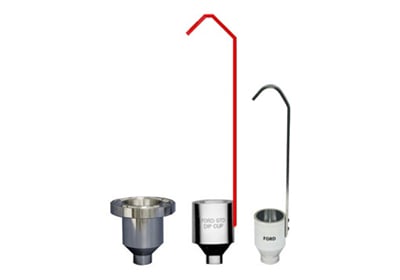
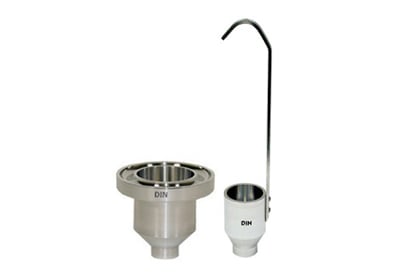
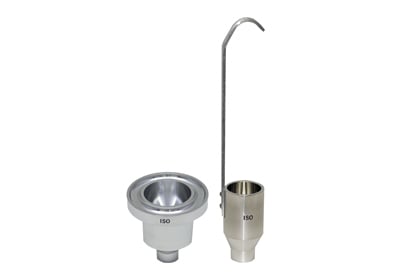
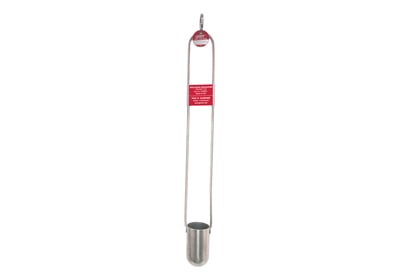
Empirical consistometers—commonly referred to as flow cups or consistency cups—represent one of the simplest and most practical methods for assessing the flow behavior of low-to-medium viscosity fluids. These devices, standardized under various international norms such as ISO 2431, DIN 53211, or ASTM D1200, determine the time required for a fixed volume of liquid to flow through an orifice of known diameter. The most common designs include the Ford Cup, DIN Cup, ISO Cup, and Zahn Cup for paints and coatings, as well as the Bostwick Consistometer for viscous food products such as sauces, and purees.

In the paint and coatings industry, consistometer cups also called viscosity cups are routinely employed for rapid quality control and batch-to-batch consistency checks. The Ford Cup No. 4, for example, is a widely adopted tool for monitoring the viscosity of solvent borne coatings, lacquers, and inks. Paint manufacturers integrate flow cup measurements into daily production routines to verify formulation stability and ensure proper application properties (e.g., leveling, film thickness, spray ability). These tests are often conducted at 25 °C using cups with orifice diameters between 2–8 mm, depending on product viscosity. The method allows operators to detect deviations in solvent ratio or pigment dispersion with high reproducibility, typically within a few seconds.
In the food and beverage sector, the Bostwick Consistometer serves a similar purpose for semi-solid products. Developed originally for tomato-based sauces, it measures the distance (in centimeters) that a food sample flows within a standardized trough under gravity over a fixed time (usually 30 sec.). Companies of Food industry employ this method to control the texture and pourability of ketchup, yogurt, baby food, or fruit purees. Because of its simplicity, it can be used directly on production lines without the need for sophisticated instrumentation or calibration, making it ideal for routine plant-level quality assurance.
The advantages of consistometric methods lie in their ease of use, speed, and low cost. They require minimal training, no electricity, and very little sample preparation. Furthermore, the measurements are directly interpretable in practical terms, reflecting how a product will behave during pouring, brushing, or dispensing. For this reason, they are invaluable for production operators and formulation chemists seeking immediate feedback during process adjustments.

However, the limitations of these empirical methods are equally significant. Flow cups and consistometers do not control or measure shear rate, and the resulting flow time provides only an indirect index of viscosity, which cannot be converted to absolute values without calibration against a reference viscometer. They are also temperature-sensitive, requiring careful thermal equilibration of both the sample and the cup to avoid errors. Furthermore, these methods are unsuitable for non-homogeneous, thixotropic, or highly viscous materials, where the gravitational flow assumption no longer holds. In the case of the Bostwick Consistometer, results can also vary with operator handling and sample surface tension.
Despite these constraints, empirical consistometers remain an essential first-line tool for rapid viscosity estimation and quality control. Their robustness, simplicity, and strong correlation with real-world application properties explain their enduring role in industrial coatings laboratories and food manufacturing plants. When combined with more advanced techniques—such as rotational or oscillatory rheometry—they provide a valuable bridge between empirical quality control and full rheological characterization.
3. Viscosity Comparison Tubes
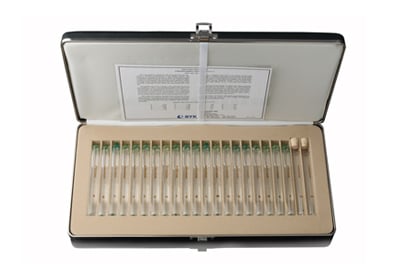
Viscosity comparison tubes—also known reference viscosity tubes—are empirical devices designed for rapid visual comparison of a sample’s flow behavior against a reference liquid of known viscosity. They consist of one or several calibrated glass tubes filled with standard fluids, allowing operators to compare flow times or bubble rise rates under identical conditions.
These instruments are widely used in industrial quality control, particularly in lubricant manufacturing, resins, paints, and inks, where precise rheological measurements are not always necessary, but consistency with a standard batch is critical. Companies employ viscosity comparison tubes for routine checks during blending or production, ensuring that products remain within acceptable viscosity ranges before more sophisticated analyses are performed with capillary or rotational viscometers.
Their advantages lie in their speed, simplicity, and minimal cost. The method requires no power supply or calibration, and the operator can detect out-of-spec batches within seconds. The approach is particularly valuable for visually transparent, Newtonian fluids such as oils, solvents, or resin solutions.

However, viscosity comparison tubes are strictly empirical—they provide relative rather than absolute viscosity values. Results are also influenced by temperature, operator skill, and tube cleanliness, which can affect bubble rise times or flow uniformity. The method is unsuitable for opaque, thixotropic, or highly viscous materials, and thus should be seen as a pre-screening tool rather than a quantitative technique.
Despite these limitations, viscosity comparison tubes remain a valuable first-line quality control method, especially in field environments or resource-limited laboratories, where they serve as a reliable, repeatable indicator of process stability.
4. Falling Ball / Falling Sphere Viscometers
The falling ball viscometer, also known as the Hoppler or Höppler viscometer, is among the most classical and conceptually simple instruments for determining the viscosity of Newtonian fluids. The method relies on Stokes’ law, where a spherical object of known diameter and density falls through a vertical or inclined tube filled with the test liquid. The terminal velocity reached by the sphere reflects the balance between gravitational, buoyant, and viscous drag forces, from which the dynamic viscosity can be calculated. These viscometers are ideal for transparent or semi-transparent Newtonian fluids, allowing accurate timing of the sphere’s descent using either manual observation or automated optical detection.
In industrial practice, falling ball viscometers find widespread application in the lubricants and petrochemical sectors, where they are employed to evaluate the viscosity of silicone oils, brake fluids, and heat transfer fluids. The method also serves in pharmaceutical laboratories, where it is used to determine the viscosity of glycerol, syrups, and intravenous formulations, substances that are typically Newtonian and transparent. Additionally, in the food and beverage industry, it assists in measuring the viscosity of honey, fruit concentrates, and edible oils, where reproducibility and gentle handling are important.

A more advanced adaptation involves automated optical tracking or high-speed imaging, improving measurement accuracy for research purposes. For instance, the High-Precision Falling Ball Viscometer developed by researchers at the University of Memphis (2020) employed fast cameras to measure glycerol-water mixtures, achieving agreement within ±1% of reference capillary data. This shows how the method continues to evolve from a traditional manual technique to a modern optical instrument capable of generating highly precise viscosity profiles.
Nevertheless, the falling ball method also exhibits significant limitations. It is restricted to clear fluids, since the motion of the ball must be visually or optically monitored; opaque or highly turbid samples, such as paints or emulsions, cannot be measured effectively. The technique is limited to a moderate viscosity range (typically 1–10,000 mPa·s) — if the fluid is too viscous, the sphere may not reach terminal velocity, leading to erroneous results. Furthermore, non-Newtonian fluids with shear-dependent viscosity produce unreliable data because the shear rate around the falling ball is not constant or easily defined. Environmental conditions, particularly temperature, also play a major role: since viscosity is highly temperature-dependent, precise thermal control (±0.1°C) is essential for consistent measurements. Finally, wall effects and ball alignment within the tube can introduce systematic errors, especially in narrow geometries.
Despite these challenges, the falling ball viscometer remains a robust and valuable training instrument. Its conceptual simplicity and traceable connection to fundamental fluid mechanics make it ideal for both educational settings and quality control of Newtonian reference liquids. Industrial laboratories continue to use this technology as a secondary verification method, complementing rotational or capillary measurements for products such as engine oils, polymer solutions, and chemical intermediates.
5. Vibrational Viscometers
Vibrational viscometers, sometimes referred to as oscillating viscometers, determine a fluid’s viscosity by measuring the damping effect that the fluid exerts on a vibrating element—typically a tuning fork, rod, or quartz crystal sensor. The underlying principle is that the viscous drag of the liquid affects both the resonant frequency and the amplitude of the oscillating element. By monitoring these changes electronically, the instrument can calculate the dynamic viscosity in real time.
One of the most significant advantages of vibrational viscometers is their ability to perform continuous, real-time viscosity monitoring in industrial process environments, where other techniques (such as capillary or rotational) would be impractical. They are compact, maintenance-free, and require no moving mechanical parts, making them well-suited for in-line or on-site measurements. These characteristics have led to widespread use in petrochemical, food processing, pharmaceutical, and cosmetic industries.
In the petrochemical sector, vibrational viscometers are employed for real-time monitoring of lubricants, fuels, and crude oils under varying temperatures and pressures. Instruments are commonly installed directly on production lines or fuel pipelines to ensure that viscosity remains within specification during refining or blending. Companies use these systems for continuous viscosity control of lubricants and base oils, enabling rapid response to process fluctuations.
In the food and beverage industry, vibrational viscometers are used for in-line quality control. For example, to monitor the viscosity of yogurts, sauces, and dairy emulsions during manufacturing. The real-time feedback allows precise control of texture, ensuring batch-to-batch consistency and improving production efficiency. Similarly, in cosmetic and personal care manufacturing, these instruments monitor the viscosity of shampoos, creams, and gels during mixing and filling, where viscosity directly affects consumer perception and packaging performance.
In the pharmaceutical industry, vibrational viscometers are applied to measure the viscosity of liquid formulations, suspensions, and injectable solutions, where sterility and minimal sample handling are essential. Their ability to measure small volumes in closed systems minimizes contamination risk and preserves product integrity.
The advantages of vibrational viscometers are:
- Real-time, continuous measurement (ideal for process control).
- Minimal sample preparation and small volume requirement.
- High temperature and pressure compatibility (up to 200 °C and 20 MPa in industrial designs).
- Low maintenance and long-term stability, as there are no rotating parts.
- Applicability to opaque or colored fluids, which are problematic for optical or capillary systems.
However, several limitations must also be considered. Vibrational viscometers often measure an apparent viscosity that may include both viscous and elastic contributions, especially in viscoelastic materials such as gels or emulsions. Calibration is fluid-dependent, meaning the instrument’s response must be correlated with reference data for each specific product type. Furthermore, they are less suited for non-homogeneous samples containing air bubbles or solid particles, which can interfere with vibration damping. Finally, while they provide excellent precision for process monitoring, they generally lack the rheological resolution (e.g., shear rate control or yield stress measurement) of rotational rheometers.
Despite these drawbacks, vibrational viscometers represent a powerful tool for process optimization and quality assurance. Their ability to provide immediate, on-line viscosity feedback makes them essential in modern automated production systems. They bridge the gap between laboratory precision and industrial practicality—ensuring that viscosity-sensitive processes remain consistent, efficient, and compliant with quality standards.
6. Rotational Viscometers and Rheometers
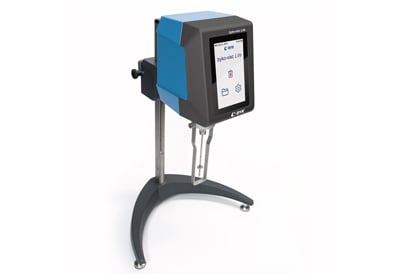
Rotational viscometers represent one of the most versatile and widely used technologies for analyzing both Newtonian and non-Newtonian fluids. These instruments operate by rotating a spindle, cone, or plate within the sample and measuring the torque required to maintain a specified angular velocity. From the relationship between shear stress (τ) and shear rate (γ̇) it becomes possible to determine the absolute viscosity value and, for non-Newtonian fluids, to construct complete flow curves describing shear-thinning, shear-thickening, or yield stress behavior; this with evolved models, called Rheometers and adapted defined geometries.
Rotational viscometers offer a significant advantage over capillary and falling ball and other empiric methods because they enable precise control of shear rate and temperature. They can analyze complex fluids under controlled deformation, providing insight into time-dependent properties such as thixotropy (decrease in viscosity under continuous shear during a time) or rheopexy (increase in viscosity with time). This versatility makes them indispensable in sectors ranging from coatings and polymers to pharmaceuticals and food manufacturing.

In the paint and coatings industry, for instance, rotational viscometers are routinely used to evaluate the viscosity profile of latex paints, inks, and they are necessary for water-based paints and coatings. Companies employ such instruments to ensure optimal application properties—balancing flowability for brush or spray application with stability to prevent sagging or dripping. The ability to measure viscosity at different shear rates is crucial here: low-shear viscosity determines storage and leveling behavior, while high-shear viscosity reflects the coating’s performance during application.
In the cosmetics industry, rheological analysis by rotational viscometers is essential for controlling the texture and spread ability of creams, lotions, and gels. Products like facial creams and body lotions are formulated to exhibit shear-thinning behavior becoming less viscous during application and recovering their structure afterward. Using cone-and-plate geometries, researchers can precisely measure yield stress and flow recovery, ensuring a balance between softness and structural stability.
The polymer industry relies heavily on rotational rheometry to characterize materials such as polypropylene melts, epoxy resins, or thermoplastic elastomers. The technique enables process engineers to predict extrusion, molding, and coating behaviors by assessing viscosity under process-relevant shear conditions. Some rheometers with specific features are capable of high-torque and high-temperature measurements, allowing complete flow characterization of viscous polymer melts and composites.
In the food sector, rotational viscometers play a critical role in quality control and product development. Foods like ketchup, mayonnaise, yogurt, or chocolate display complex shear-thinning or viscoelastic behaviors that directly influence consumer perception.
However, despite their versatility, rotational viscometers also have limitations. Measurements can be affected by wall slip (when the sample slides rather than deforms near the measuring surface) or edge effects if the geometry is not properly filled. At very low shear rates, torque values may fall below the instrument’s sensitivity limit, leading to inaccurate readings. For extremely viscous materials (e.g., heavy bitumen, rubber compounds), special high-torque geometries or capillary rheometers may be more appropriate. Additionally, the method requires careful calibration, temperature control, and sample preparation, particularly for materials sensitive to shear history.
Despite these constraints, rotational viscometers remain the workhorse of rheological characterization. Their ability to reproduce real process conditions, coupled with their compatibility with standardized testing protocols (e.g., ASTM D2196 for paints or ISO 3219 for polymer melts), makes them indispensable tools across industrial and research laboratories. They bridge the gap between simple viscosity measurement and full rheological profiling—making them the cornerstone of modern rheology.
7. Oscillatory Rheometers
Oscillatory rheometers represent the most advanced class of rheological instruments, capable of probing not only a fluid’s viscosity but also its elastic and viscous components as a function of deformation frequency, strain amplitude, or time. Unlike conventional rotational viscometers, which apply a steady shear, oscillatory rheometers impose a sinusoidal oscillation on the sample and measure the resulting stress response. From this, the storage modulus (G′)—representing the elastic energy stored—and the loss modulus (G″)—representing the viscous energy dissipated—can be determined. The ratio of these parameters provides insight into whether a material behaves more like a solid or a liquid under given conditions.
This technique is indispensable for studying non-Newtonian, viscoelastic, and structured materials, where viscosity alone cannot capture the full complexity of flow behavior. Oscillatory rheometers are used extensively in polymer science, food rheology, cosmetics, and biomaterials research, as well as in quality control for products with time-dependent or gel-like structures.
In the polymer industry, oscillatory rheometers are central to evaluating the molecular architecture and viscoelastic spectrum of materials such as polyethylene (PE), polystyrene (PS), polyurethane (PU), and rubber blends. Frequency sweep tests that characterize long-chain branching, relaxation times, and processability. For example, in automotive polymer development, rheological data help engineers tune extrusion parameters or predict product performance under dynamic loading.
In the food industry, oscillatory rheometry is widely applied to understand and optimize the texture, mouthfeel, and stability of products such as yogurts, cheese, dough, sauces, and chocolate. A well-known example is the characterization of ketchup and mayonnaise, both of which exhibit yield stress and gel-like structure at rest. Companies use oscillatory tests to evaluate gelation behavior and predict how these materials recover after shear during processing or packaging. Such insights are vital for ensuring consumer-perceived consistency and sensory appeal.
In cosmetics and personal care, oscillatory rheometers play a crucial role in designing creams, gels, and emulsions that exhibit desirable viscoelasticity soft enough to spread easily yet firm enough to remain stable in packaging. The storage modulus (G′) serves as a direct indicator of product firmness, while the phase angle (δ = tan⁻¹(G″/G′)) indicates how “liquid-like” or “solid-like” the formulation is. Manufacturers routinely use oscillatory rheometry to evaluate formulation aging, stability under temperature cycling, and sensory properties.
In biomaterials and pharmaceuticals, oscillatory rheometers are used to study hydrogels, bioinks, and injectable formulations, where viscoelasticity governs both processability and performance. For example, cell-laden alginate hydrogels used in 3D bioprinting require a delicate balance between elasticity (to maintain shape fidelity) and viscosity (to allow extrusion). Oscillatory amplitude sweeps help determine the linear viscoelastic region (LVR)—a key design parameter for bioprinting.
The advantages of oscillatory rheometers are substantial:
- They provide comprehensive viscoelastic characterization (G′, G″, complex viscosity η*).
- They are capable of frequency, amplitude, and temperature sweeps for detailed material profiling.
- They can capture structural recovery, thixotropy, and gelation kinetics.
- Their modular geometry options (cone–plate, parallel plate, coaxial cylinder) enable testing of solids, liquids, and pastes alike.
However, these instruments also come with notable limitations. They are expensive and complex, requiring expert operation and meticulous sample preparation. Measurements can be sensitive to sample loading, evaporation, and edge effects, especially for soft or highly volatile materials. In addition, oscillatory rheometers are generally limited to low- to moderate-shear regimes—they cannot replicate the extreme shear rates found in high-speed industrial processes such as injection molding or spraying. Finally, test interpretation demands rheological expertise, as parameters such as moduli, phase angle, and compliance must be carefully analyzed in context.
Despite these constraints, oscillatory rheometers represent the pinnacle of rheological instrumentation. They bridge the gap between microscopic structure and macroscopic performance, providing a quantitative understanding of how molecular organization influences flow and deformation. Their role in modern material design, from 3D-printed hydrogels to smart coatings and functional foods, makes them an indispensable tool in both academic and industrial research.
Comparative Analysis
The comparative evaluation of viscosity measurement techniques highlights the fundamental trade-off between measurement precision, rheological insight, and industrial practicality. Each method occupies a distinct position in the landscape of fluid characterization, serving specific needs that range from laboratory research to real-time process control. Accordingly, the selection of an appropriate method must be guided by the nature of the material, the range of shear conditions, and the industrial context in which measurements are performed.
At the most empirical end of the spectrum, viscosity comparison tubes and consistometers (such as Ford, ISO, DIN, and Bostwick types), remain indispensable tools for rapid, on-site assessments of fluidity and consistency. Their simplicity, portability, and low cost make them ideal for routine quality control, where a direct visual or time-based indication of flow behavior suffices. Although these devices provide only relative indices of viscosity and lack precise shear-rate control, their strong correlation with real-world performance—such as pourability, spray ability, or spread ability—ensures their continued industrial relevance. In many manufacturing environments, they serve as a first diagnostic layer, quickly identifying formulation or batch inconsistencies before more advanced testing is required.
Capillary and falling ball viscometers offer high reproducibility and accuracy for Newtonian fluids, and they remain the standard reference techniques for calibration and regulatory testing (e.g., ISO 3104, ASTM D445). Their limitations—sensitivity to temperature, cleanliness, and restricted shear-rate control—confine their use primarily to simple, low-viscosity liquids such as oils, solvents, and dilute polymer solutions.
Rotational viscometers and rheometers, by contrast, provide controlled shear conditions and are therefore the preferred choice for non-Newtonian or structured materials. They enable detailed rheological profiling, including the study of thixotropy, yield stress, and shear-thinning behavior. Such versatility makes them the workhorse of modern rheology, widely applied in coatings, polymer melts, cosmetics, and foods where processing and end-use performance depend on complex flow dynamics.
Vibrational viscometers bridge laboratory and process environments by offering continuous, real-time viscosity monitoring directly within production lines. Their robust, low-maintenance design and compatibility with extreme temperatures and pressures have driven widespread adoption in petrochemical refining, lubrication systems, and food processing. Despite the need for fluid-specific calibration and limited sensitivity to viscoelasticity, they play a vital role in in-line process control and automated quality assurance.
Finally, oscillatory rheometers extend measurement capability to the linear viscoelastic regime, revealing the structural and dynamic behavior of complex materials. Their ability to quantify both storage (elastic) and loss (viscous) moduli provides unparalleled insight into formulation design, gelation, and stability in fields such as polymer science, biomaterials, and advanced coatings. However, their complexity, cost, and laboratory confinement limit their use to R&D and high-precision characterization.
In summary, the optimal viscosity measurement method depends strongly on the application context.
- Empirical consistometers and Comparison viscosity Tubes excel in rapid, on-site quality control and batch screening.
- Capillary and falling ball viscometers provide standardized precision for Newtonian fluids.
- Rotational and oscillatory rheometers enable comprehensive rheological analysis for complex, non-Newtonian materials.
- Vibrational viscometers deliver real-time, in-line monitoring for process optimization.
Rather than competing, these methods are complementary—each addressing a specific layer of the viscosity measurement spectrum, from empirical field testing to advanced rheological characterization. Together, they ensure that industries can maintain quality, reproducibility, and process efficiency across an ever-expanding range of fluid products and formulations.
Comparative Summary of Viscosity Measurement Techniques
| Technique | Typical Fluids | Main Advantages | Key Limitations | Typical Industrial Applications |
|---|---|---|---|---|
|
Empirical Consistometers (Flow Cups, Bostwick) | Low-to-medium viscosity Newtonian and semi-structured fluids | Very fast, inexpensive, easy to use, strong correlation with real-world flow (pour ability, spread ability) | Only provides relative viscosity index; no shear-rate control; temperature sensitive; not suitable for highly viscous or no Paints, coatings, inks, sauces, tomato paste, purees, dressing-homogeneous materials | Paints, coatings, inks, sauces, tomato paste, purees, dressings |
| Viscosity Comparison Tubes | Transparent Newtonian fluids | Extremely quick and low-cost; no calibration; good for batch comparison | No absolute viscosity value; temperature-dependent; operator variability | Lubricants, oils, resins, inks |
|
Capillary Viscometers (Ubbelohde/Ostwald) | Newtonian liquids, oils, polymer solutions | High precision, standardized, inexpensive, simple | Not suitable for non-Newtonian fluids; temperature-sensitive | Fuel oils, solvents, polymers, pharmaceuticals |
| Falling Ball | Transparent Newtonian fluids | Simple, reliable, minimal calibration | Limited viscosity range; optical clarity required | Lubricants, glycerol, silicone oils, food syrups |
| Rotational Viscometers and Rheometers | Newtonian & non-Newtonian fluids | Wide shear range, shear rate control, detailed flow curves | Requires calibration and skilled operation | Paints, cosmetics, foods, polymer melts |
| Vibrational Viscometers | Newtonian & semi-structured fluids | Real-time, in-line process control, robust, compact | Fluid-dependent calibration; limited rheological insight | Process control in petrochemical, cosmetic, food industries |
| Oscillatory Rheometers | Complex viscoelastic materials | Full viscoelastic characterization (G′, G″, η*) | Expensive, complex, limited to lab use | Polymers, biomaterials, gels, emulsions, 3D bioprinting |
Method Selection
Selecting the appropriate viscosity measurement technique requires balancing precision, sample type, and operational context.
Viscosity Method According to Viscometer Type:
- Use flow cups for rapid checks of suitable low- to medium-viscosity coatings when a fast, practical efflux-time specification is sufficient.
- Use Krebs/Stormer viscometers when KU values are the established control language for a paint product or production line.
- Use rotational viscometers for routine evaluation of Newtonian and non-Newtonian coatings, particularly when shear sensitivity and thixotropy matter.
- Use cone-and-plate instruments or rheometers when formulation development requires defined shear conditions, detailed flow behavior, yield stress, recovery, or viscoelastic characterization.
- Use capillary or falling-ball methods for appropriate transparent, homogeneous Newtonian liquids, such as solvents, resins, oils, or other coating raw materials.
- Use vibrational viscometers when continuous in-process feedback is more valuable than a full laboratory rheology profile.
Viscosity Method According to Application:
- For quality control of homogeneous Newtonian fluids, Comparison viscosity tubes, capillary or falling ball and Consistometric methods remain optimal.
- For process development and formulation, where fluids exhibit shear-dependent behavior, rotational viscometers are preferred.
- For real-time industrial process monitoring, vibrational viscometers offer the best compromise between robustness and responsiveness.
- For research and material design, particularly when viscoelasticity and microstructure are key, oscillatory rheometers are indispensable.
Ultimately, the combination of multiple viscometric techniques often yields the most complete picture of a material’s rheological behavior. Modern laboratories frequently integrate capillary, rotational, and oscillatory methods, allowing seamless transition from basic viscosity measurements to full rheological characterization—thereby linking process conditions to end-use performance with scientific precision.
Representative References (APA 7th Edition)
- Barnes, H. A., Hutton, J. F., & Walters, K. (1989). An Introduction to Rheology. Elsevier.
- Mezger, T. G. (2020). The Rheology Handbook: For Users of Rotational and Oscillatory Rheometers (5th ed.). Anton Paar.
- ASTM D445-19. (2019). Standard Test Method for Kinematic Viscosity of Transparent and Opaque Liquids (and Calculation of Dynamic Viscosity). ASTM International.
- ISO 3104:2020. (2020). Petroleum products — Transparent and opaque liquids — Determination of kinematic viscosity and calculation of dynamic viscosity. ISO.
Other Viscosity Resources:
- Understanding your Viscosity Measurement
- Chemical and Microstructural Origins of Rheological Similarities in Formulated Products
- Viscosity Terms and Definitions
- The Proper Process for Measuring with a Viscosity Cup
- Viscosity Cup FAQ's
- Viscosity and Viscometer Measurement Q&A
- Viscosity Related ASTM Standards for Rotational Viscometry
- Navigating Viscosity: A Guide to Viscometry Techniques for Precision Coating Analysis