
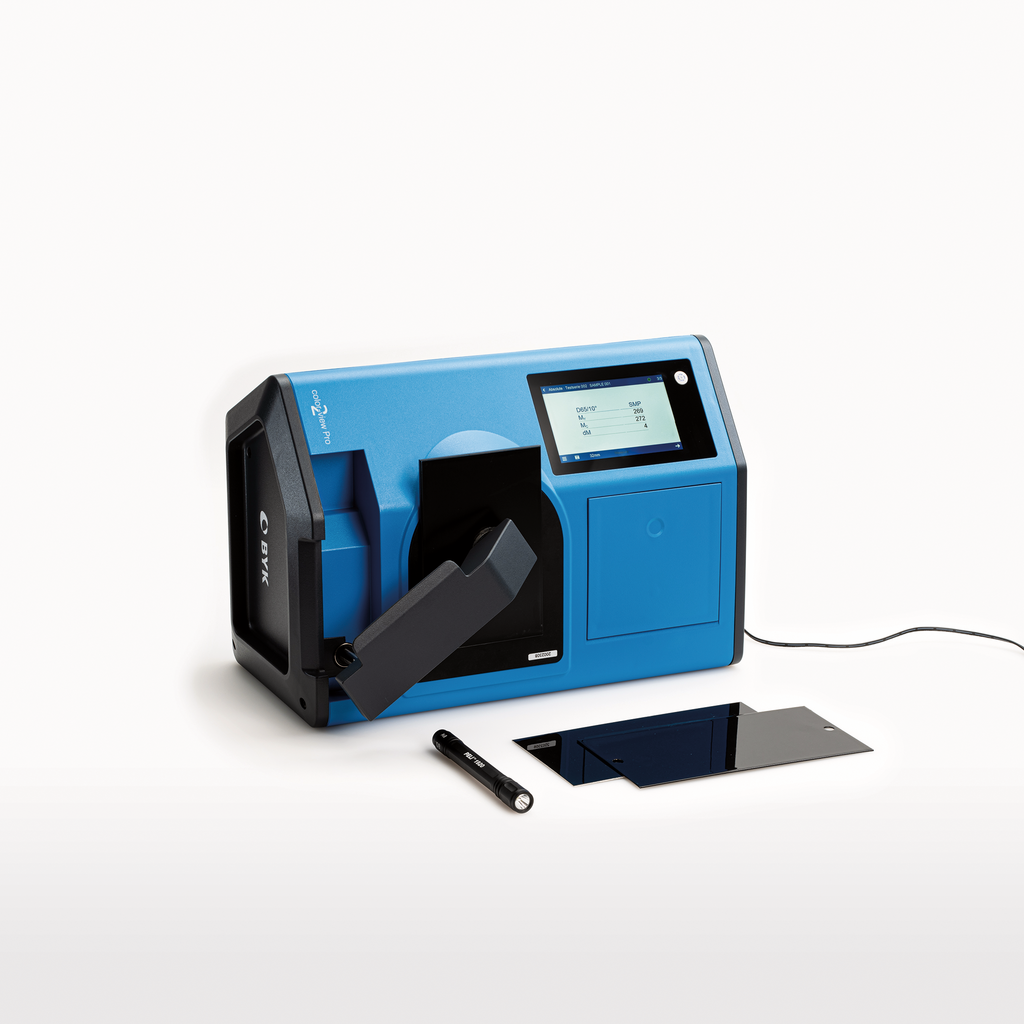
Color & Jetness measurement: Fixed or variable aperture
Art. No.: 7610
color2view Pro
Color & Jetness measurement with fixed aperture
- Objective evaluation of Color, 20° / 60° Gloss and lightfastness by combining 3 measurement technologies in one instrument
- Fixed aperture (32 mm) with extra-large measuring spot (22 mm) guarantees highly reliable readings
- Quality control of deepest blacks with an unsurpassed accuracy offering a special Jetness Mode
Select your Model
Enter a value between 1 and 100000000 in increments of 1.
excl. taxes & shipping cost
The color2view Pro combines intuitive navigation, breakthrough technical performance, and multiple measurement methods - 45°c:0° color, 20°/60° gloss, and fluorescence - in one benchtop spectrophotometer with peak performance for deepest black offering a special Jetness Mode.
- Objective 45°c:0° color measurement – to measure color as you see it
- 20° and 60° gloss measurement to clearly differentiate medium to high gloss samples
- Quantification of fluorescence to predict long term color stability
- Compact and lightweight design with sample opening "top and front" to best suit different sample sizes
- Large color touch display with icon-based menu for ease-of-use
- Live preview of the measurement spot to avoid false readings
- Smart high tech LEDs with peak performance for digital standards
- Exchange of digital standards between Benchtop and portable instrument – without any extra profiling
- Professional data analysis with smart-chart
| Technical Specifications | |||||||||||||||||||
|---|---|---|---|---|---|---|---|---|---|---|---|---|---|---|---|---|---|---|---|
| Measuring Capability | |||||||||||||||||||
| Color Measurement | |||||||||||||||||||
| Color Geometry | |||||||||||||||||||
| Sample Port | |||||||||||||||||||
| Measuring Area | |||||||||||||||||||
| Spectral Range Colorimetric | |||||||||||||||||||
| Spectral Range Fluorescence | |||||||||||||||||||
| Measurement Range | |||||||||||||||||||
| Repeatability Color | |||||||||||||||||||
| Reproducibility Color | |||||||||||||||||||
| Color Systems | |||||||||||||||||||
| Color Indices | |||||||||||||||||||
| Illuminants | |||||||||||||||||||
| Observer | |||||||||||||||||||
| Jetness Indices | |||||||||||||||||||
| Repeatability Jetness | |||||||||||||||||||
| Reproducibility Jetness | |||||||||||||||||||
| General | |||||||||||||||||||
| Memory | |||||||||||||||||||
| Interface | |||||||||||||||||||
| Display | |||||||||||||||||||
| Languages | |||||||||||||||||||
| Power supply | |||||||||||||||||||
| Weight | |||||||||||||||||||
| Weight | |||||||||||||||||||
| Operating temperature | |||||||||||||||||||
| Storing temperature | |||||||||||||||||||
| Operating temperature | |||||||||||||||||||
| Storing temperature | |||||||||||||||||||
| Relative humidity | |||||||||||||||||||
| Dimensions: L x W x H | |||||||||||||||||||
| Dimensions: L x W x H | |||||||||||||||||||
| Gloss Measurement | |||||||||||||||||||
| Gloss Measurement |
| ||||||||||||||||||
We need your approval
This content is provided by YouTube. By enabling this content, your personal data may be processed by the vendor and cookies may be set.
Accept
Cookie Banner powered by  consentmanager.net
consentmanager.netSpectrophotometer, color2view Pro
White calibration standard
Color and gloss test standard
Certificate
Grey calibration standard
Black test standard
LED flashlight to check cleanness
2 smart-chart licenses for download
USB cable for data transfer
Power Supply
Manual
1-day training
White calibration standard
Color and gloss test standard
Certificate
Grey calibration standard
Black test standard
LED flashlight to check cleanness
2 smart-chart licenses for download
USB cable for data transfer
Power Supply
Manual
1-day training
Manuals
- Operating_Manual_color2view_301500210_E_2510.pdf
Operating_Manual_color2view_301500210_E_2510.pdf - Guide_smart-lab_color2view_225026259_E_2405.pdf
Guide_smart-lab_color2view_225026259_E_2405.pdf
Short Instructions
- Short_Instructions_color2view_301500209_2307.pdf
Short_Instructions_color2view_301500209_2307.pdf - Short_Instructions_Granules_Measurement_301500375_2510.pdf
Short_Instructions_Granules_Measurement_301500375_2510.pdf
Safety Instructions
- Safety_Instructions_color2view_301500208_2309.pdf
Safety_Instructions_color2view_301500208_2309.pdf
Brochure
- Brochure_color2view_225026017_E_2603.pdf
Brochure_color2view_225026017_E_2603.pdf

Automatic Sample Rotator
Automatic device with turning sample container
Article No: 7603

color2view Pro X
Color & Jetness measurement with variable apertures
Article No: 7605
