Fundamentals of Paint Drawdowns: Techniques, Tools, and Technology for Coatings Evaluation
Paint drawdowns serve as one of the most essential steps in coatings evaluation, providing a controlled and standardized way to assess optical, mechanical, and performance properties of paints and coatings. Inconsistent application methods, substrate choices, or measurement practices can introduce unnecessary variability into testing programs. By understanding the fundamentals of drawdown techniques, proper tool selection, and emerging technologies, laboratories and R&D facilities can significantly improve reproducibility and accuracy in their evaluations.

Importance of Standardization
Standardization in paint drawdowns is critical for ensuring reliable and repeatable results in coatings evaluation. Variability during application can directly influence key properties such as color development, gloss, hiding power, opacity, and overall film build, making comparisons between different formulations less accurate. By applying coatings at a consistent thickness, laboratories can achieve dependable results across tests and facilities, reducing uncertainty and enabling meaningful performance evaluations. Standardized practices also help minimize human error and operator variability, creating a more controlled testing process. Furthermore, both regulatory standards and customer requirements increasingly demand documented, repeatable procedures, making standardization not just beneficial but essential for modern coatings evaluation.
Tools for Paint Drawdowns
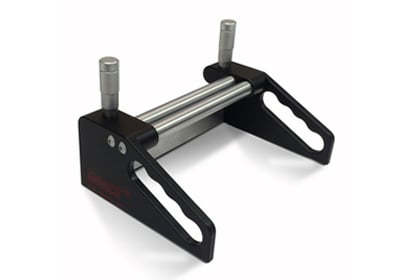
Film applicators are the heart of the paint drawdown process, as they determine how evenly and consistently a wet film is deposited onto the testing substrate. The Microm Film Applicator is a precision-machined tool that uses a fixed gap to control coating thickness during application. These applicators are particularly valued for their ability to deliver highly uniform films, making them ideal for quality control and R&D labs focused on reproducibility. Their robust design ensures that even when used repeatedly, they provide reliable, consistent performance without wear-related variability.
Wire-wound rods (Meyer rods) are another widely used option, particularly favored for applying thin films with fine control. These applicators feature stainless steel rods tightly wound with wire, with the wire size determining the wet film thickness. They are cost-effective, versatile, and allow formulators to apply incremental changes in thickness simply by switching rod sizes. For applications requiring multiple wet film thicknesses in one stroke, multi-gap bars are an efficient solution. These applicators feature several precisely machined clearances along a single bar, allowing multiple film builds to be evaluated side by side on one substrate. This setup increases testing efficiency, making them particularly useful for comparing properties like hiding power or color strength in one step. Finally, bar-type applicators are rugged and versatile tools suited to a wide range of coating systems, from decorative paints to specialty coatings. Their sturdy build makes them effective for consistent wet film application on substrates with varying hardness or texture, providing reliable results even under demanding lab conditions.
Supporting Materials
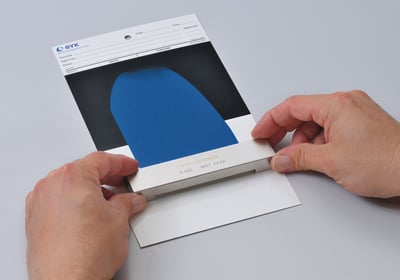
Supporting materials are fundamental to the drawdown process, as they define both the substrate that supports the wet film and the surfaces that ensure application consistency. Drawdown charts are the most widely used substrate in laboratory coatings evaluation. These charts, often manufactured from sealed, high-quality paperboard, provide a uniform, non-absorptive surface that supports objective evaluations of optical properties like color, opacity, and hiding power. Their consistent color, gloss, and smoothness make them particularly suitable for reproducible film applications, which is critical for comparative testing or routine quality control. Additionally, drawdown charts frequently feature both black and white areas, enabling a single chart to be used for contrast ratio assessments and making it easy to visualize coverage and hiding power differences.
Alternative substrates include metal and plastic panels, which offer greater rigidity and can more effectively mimic industrial end-use surfaces such as those found in automotive or architectural applications. Glass and vacuum plates are also indispensable as supporting surfaces under drawdown charts or panels. Glass plates deliver a hard, perfectly level substrate, preventing any surface irregularities from influencing the drawn film. When used in conjunction with vacuum plates, the drawdown chart or testing panel is securely held, eliminating potential for slippage, curling, or wrinkles during the drawdown process. This combination creates ideal conditions for achieving uniform film thickness and defect-free appearance, ensuring the highest confidence in analytical results. Collectively, the proper selection and use of supporting materials underpin the reliability, accuracy, and repeatability of coatings evaluation workflows.
Wet Film Thickness Control
Accurate wet film measurement directly affects the reproducibility of cured film properties.
Contact Method
This hands-on approach utilizes notched, comb-like gauges that are pressed perpendicularly into the freshly applied film. By reading which notches make contact with the surface and which remain dry, technicians can quickly determine if the wet film thickness falls within the specified range for effective coverage, performance, and material efficiency. Wet film gauges are available in various designs to suit different substrates, surface shapes, and precision requirements.
The Calling Card Wet Film Thickness Gauge features a customizable notched design, with measurement scales available in both mils and microns. Its flat, credit card-sized shape offers convenience for field or laboratory use, and custom branding or unique scale configurations are possible. The Hotcake Wet Film Thickness Gauge is specifically engineered for measuring on slightly curved or irregular surfaces, such as pipework or contoured panels. Its circular design allows for accurate readings where standard flat gauges would not sit flush, ensuring reliable results even on non-flat geometries. For applications demanding the highest accuracy on very thin films, the Thin Film Wet Thickness Gauge offers a measurement range from 1/10th to 4 mils (2.5 to 100 microns). This gauge provides fine gradations required for R&D or QC work on specialty coatings, inks, or varnishes. The Dual Nordson Type Wet Film Thickness Gauge is a versatile, multi-functional tool with four different measurement faces that can be rotated to expose varying notched scales. This flexibility enables quick adjustment for different thickness ranges or standards in a single device; it is available with a certificate of calibration for applications demanding traceable accuracy. These wet film gauges, tailored for diverse testing needs, help ensure correct coating application and compliance with industry standards.
Non-Contact Method
Non-contact measurement methods are used to check coating thickness right after it's applied, without touching the wet surface. Unlike traditional contact gauges, these instruments utilize advanced optical, thermal, or ultrasonic principles to assess film thickness without physically touching the wet or uncured surface. This method is especially helpful for delicate or irregular surfaces and automated production lines. Non-contact methods help avoid disturbing the coating, improve repeatability, and allow immediate process corrections.
The Coatmaster Flex is a leading example of a non-contact, non-destructive wft gauge with an optical sensor that measures wet film thickness using a patented photothermal principle. Unlike contact gauges, the coatmaster Flex works regardless of coating color or material and doesn’t require precise alignment or distance. It offers instant feedback right after application, helps reduce scrap and material waste, and integrates easily with factory data systems. The device’s reliability and ease of use are especially important for large-scale coating operations and manufacturers seeking to meet stringent quality standards.
Automated drawdown technology
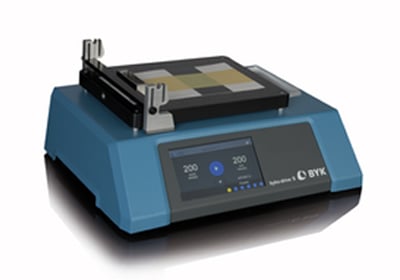
Automated drawdown technology has transformed the paint and coatings industry by bringing precision and consistency to the film application process. In coatings evaluation, uniform film thickness is critical for reliable testing of properties like color, gloss, hiding power, and drying time. Manual drawdowns can introduce significant variation due to differences in speed and pressure applied by each technician. Automatic film application solves this problem by precisely controlling application speed, pressure, and movement. This eliminates operator error and provides reproducible results every time, regardless of who performs the test or where it’s conducted.
Automatic film applicators and other advanced motorized systems allow laboratories to set and repeat exact drawdown parameters. These machines work with a variety of applicators including micrometer film applicators, wire-wound rods, and bar-type applicators and can accommodate different substrates and heating options for maximum flexibility. Key features often include adjustable speed, programmable drawdown distance, vacuum plates for holding charts, and even heated beds for specialized requirements. The result is a uniform, defect-free coating that consistently meets test standards, streamlining workflows in R&D, quality control, and production environments.
Practical Guidelines for Reproducibility
- Select the correct applicator for the targeted film build and coating rheology.
- Standardize drawdown conditions, including speed, pressure, substrate type, and environmental controls.
- Use vacuum plates or chart clamps to secure test surfaces.
- Validate wet film thickness through independent measurement during early stages of testing.
- Incorporate automated drawdown machines where feasible for high-throughput, low-variability operations.
Conclusion
Mastering the fundamentals of paint drawdowns is key to reliable coatings evaluation. From manual applicators to fully automated systems, the choice of tools, substrates, and measurement methods directly influences accuracy and reproducibility. By adopting standardized practices and staying attuned to emerging technologies, laboratories can ensure consistent quality control and strengthen their ability to innovate in paint and coatings development.