Chemical and Microstructural Origins of Rheological Similarities in Formulated Products
Rheology-Based crossed Classification of Formulated Products Across Industrial Sectors
The rheological behavior of formulated products is fundamentally governed by their chemical composition and microstructural organization, in order to correspond to their industrial application perfectly. Across paints, food, cosmetics, pharmaceuticals, and polymers, similar rheological responses emerge whenever comparable molecular architectures, interfacial phenomena, or particulate networks are present. Understanding these chemical origins is essential for selecting appropriate viscosity measurement techniques.

Figure 1. Chemical motifs, microstructural organization, rheological behavior, and corresponding measurement techniques that define the main rheological classes of formulated products across coatings, food, cosmetics, pharmaceuticals, and polymers.
Molecularly Simple Fluids: Newtonian Behavior
Newtonian behavior arises when the internal structure of a fluid does not reorganize under shear. Chemically, this is characteristic of systems composed of small molecules or dilute, non-interacting macromolecules.
Typical chemical features include
- Low molecular weight species (solvents, oils): These molecules possess limited chain length, minimal conformational freedom and rapid molecular relaxation times. As a result, molecular rearrangements occur much faster than the timescale of applied deformation, preventing any shear induced structural anisotropy. Typical examples include hydrocarbons, alcohols, glycols, and simple esters.
- Weak intermolecular interactions (van der Waals, hydrogen bonding at low density): In Newtonian fluids, intermolecular forces are generally weak and short-ranged like van der Waals interactions that dominate in non-polar liquids, Hydrogen bonding that may be present but remains transient and sparsely distributed and Electrostatic interactions that are minimal or fully screened. Because these interactions are easily disrupted by thermal motion, the fluid lacks a persistent microstructure. Even under shear, molecular neighborhoods reorganize continuously, leading to purely viscous dissipation without elastic storage.
- Polymer concentrations below the overlap threshold (c < c*): Dilute polymer solutions may still exhibit Newtonian behavior when the polymer concentration remains below the overlap concentration (c*), defined as the point at which polymer coils begin to interpenetrate. In this regime, Polymer chains behave as isolated entities, Hydrodynamic interactions are weak and Entanglement effects are absent. Viscosity increases relative to the pure solvent but remains independent of shear rate. This regime is critical for determining intrinsic viscosity, which is directly related to polymer molecular weight via the Mark–Houwink equation.
Industrial Examples of Newtonian Fluids
- Coatings Industry: Organic solvents and base oils used in coatings (e.g., mineral spirits, xylene, white oils) are classical Newtonian fluids. Their predictable flow behavior simplifies formulation, pumping, spray and dip application.
- Food and Beverage Systems: Simple beverage formulations composed of water, sugars, acids, and flavor compounds typically behave as Newtonian fluids at low solids content. The absence of polymeric thickeners or suspended particles ensures constant viscosity over practical shear rates. Examples include Soft drinks, Clear juices, Sugar syrups at moderate concentrations.
- Pharmaceutical Solutions: Many pharmaceutical liquids such as saline solutions, glucose infusions, and dilute antibiotic formulations are Newtonian by design. Constant viscosity ensures accurate dosing, predictable flow through tubing and syringes, reproducible delivery in medical devices. Regulatory standards often require viscosity characterization under controlled temperature conditions.
- Dilute Polymer Binders: In coatings and adhesives, dilute polymer binders (e.g., acrylic or vinyl solutions at low solids content) exhibit Newtonian behavior prior to solvent evaporation. This is particularly relevant for penetration into porous substrates or film leveling at early drying stages.

Rheological Consequences and Measurement Strategy
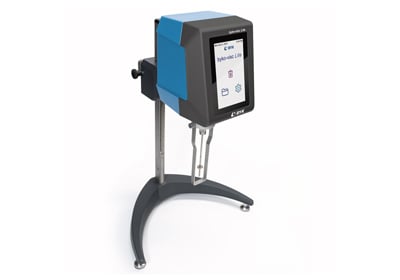
Because shear does not alter molecular arrangement, viscosity remains constant. This makes capillary viscometers particularly suitable for lowest viscosities, bubble viscosity tubes and rotational viscometers for low and medium viscosity, as they measure intrinsic viscosity under well-defined laminar flow conditions. Temperature sensitivity remains the dominant experimental concern.
- Capillary Viscometers: (Ubbelohde, Ostwald) are particularly well suited for low viscosity Newtonian fluids, as they operate under well-defined laminar flow, provide high precision and repeatability and are standardized (ISO, ASTM). They are especially valuable for determining intrinsic viscosity and for reference measurements.
- Bubble Viscosity Tubes: Provide a rapid, comparative assessment of viscosity in the low-viscosity range. While less precise, they are widely used for Quality Control, incoming raw material inspection or quick consistency checks.
- Rotational Viscometers: For low to medium viscosity Newtonian fluids, those viscometers offer flexibility in temperature control and ease of operation. When used at a single shear rate, they provide reliable viscosity values consistent with capillary methods.
Experimental Considerations: Temperature Sensitivity
For Newtonian fluids, temperature remains the dominant experimental variable influencing viscosity. Molecular mobility increases with temperature, leading to an exponential decrease in viscosity described by Arrhenius-type relationships. Accurate viscosity measurement therefore requires precise temperature control, Thermal equilibration of the sample and Consistent measurement protocols.
Polymer-Driven Shear-Thinning Systems
Shear-thinning behavior is characterized by a decrease in apparent viscosity with increasing shear rate. Unlike Newtonian fluids, these materials undergo microstructural reorganization under flow, leading to reduced resistance to deformation. This behavior is intrinsically linked to the presence of macromolecular species or weakly structured networks within the fluid.
Mathematically, shear-thinning fluids obey non-linear constitutive laws such as the power-law model, where viscosity decreases as a function of shear rate.
Key chemical drivers
- High molecular weight polymers: The primary chemical origin of shear-thinning behavior is the presence of long, flexible polymer chains with high molecular weight. These chains possess large hydrodynamic volumes, exhibit significant conformational freedom and interact through entanglements and transient contacts. At rest or under low shear, polymer chains adopt random coil conformations, generating high viscous resistance. As shear rate increases, chains progressively align in the flow direction, reducing hydrodynamic drag and apparent viscosity. Typical polymers include Cellulosic derivatives (HEC, HPMC), Acrylic and polyurethane thickeners and Xanthan gum, guar gum, alginates
- Polymer Concentration Above the Overlap Threshold (c > c*): Once polymer concentration exceeds the overlap concentration Polymer coils interpenetrate, hydrodynamic interactions become dominant or entanglement density increases. This leads to a viscosity that is strongly shear-rate dependent. The degree of shear-thinning increases with molecular weight, concentration, and chain flexibility.
- Associative Interactions and Transient Networks: In many modern formulations, polymers are not only entangled but also associative, forming reversible networks via Hydrophobic interactions, Hydrogen bonding or Polymer–surfactant complexes. These associations create temporary junction zones that break under shear and reform at rest, amplifying shear-thinning behavior.
Industrial Examples of Shear-Thinning Fluids
- Paints and Coatings: Most architectural and industrial paints are deliberately formulated to be shear-thinning. High viscosity at rest prevents sedimentation and sagging, Low viscosity under shear ensures easy brushing, rolling, or spraying. This behavior arises from the combination of Associative polymer thickeners (Latex or associative polymers), Pigment–binder interactions or Weak flocculation structures.
- Cosmetics and Personal Care: Shear-thinning behavior is essential for consumer perception: for example Creams, shampoo and lotions must be spread easily under application or structure must recover after use, thus preventing runoff. Chemically, this behavior originates from polymer-thickened emulsions and surfactant-polymer networks.
- Food Systems: Many food products exhibit shear-thinning behavior, including sauces and dressings, Yogurt and dairy desserts or fruit preparations. Protein networks and polysaccharide thickeners align or disentangle under shear, reducing viscosity during pouring or chewing.
- Pharmaceutical Formulations: Like suspensions, syrups, and topical gels are often shear-thinning to balance for stability during storage or Ease of administration. Polymeric excipients (e.g., carbomers, cellulose derivatives) play a central role.

Rheological Consequences and Measurement Strategy
- Rotational Viscometers and Rheometers: The primary tools for shear-thinning fluids because they allow precise control of shear rate or shear stress, enable construction of full flow curves (η vs γ̇) and capture low-shear and high-shear behavior. Cone-and-plate or concentric cylinder geometries are commonly used.
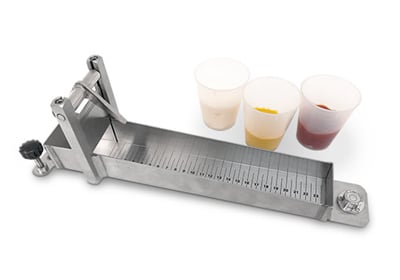
- Empirical Methods (Flow Cups, Bostwick): Remain useful for quality control but only provide apparent viscosity at an ill-defined shear rate or relative consistency indices. They cannot resolve the shear-rate dependence intrinsic to these materials.
Experimental Considerations
Challenges include ensuring steady-state flow is reached, avoiding wall slip for polymer-rich systems and controlling temperature, as shear-thinning polymer solutions are thermally sensitive. Shear-thinning fluids represent a bridge between simple Newtonian liquids and structured yield-stress materials. Their behavior arises from reversible molecular alignment rather than permanent structure, making them highly tunable through polymer chemistry and formulation design. Understanding their molecular origins allows formulators to engineer viscosity profiles tailored to specific application conditions while selecting the appropriate rheological measurement technique.
Yield-Stress Materials: Network Formation and Interparticle Interactions
Yield-stress materials are characterized by the existence of a critical stress threshold (τ₀) below which the material behaves as a solid and above which it flows as a liquid. This behavior reflects the presence of a continuous, load-bearing microstructure that resists deformation until sufficient stress is applied.
Chemical and structural origins include
- Particle Networks and Interparticle Forces: Yield stress most commonly arises from dense particulate systems where particles form a percolated network through van der Waals attractions, electrostatic interactions or steric stabilization with polymer bridging. Pigments, fillers, or solid fat crystals can form such networks when particle volume fraction exceeds a critical value.
- Concentrated Emulsions and Droplet Packing: In concentrated emulsions, yield stress originates from high droplet volume fraction, Droplet deformation and jamming, interfacial tension and surfactant-mediated interactions. The droplets behave as soft elastic entities that must be deformed to initiate flow.
- Polymer–particle bridging: Associative polymers can adsorb onto multiple particles simultaneously, creating bridging flocculation. This leads to a mechanically stable structure capable of sustaining stress.
- Physical gel formation: Physical gels arise from the formation of a three-dimensional network of macromolecules or supramolecular assemblies, held together by reversible, non-covalent interactions rather than permanent chemical crosslinks. These interactions include Hydrogen bonding, Hydrophobic associations, Ionic interactions and Crystallite or junction zone formation. In contrast to chemical gels, physical gels are thermoreversible and shear-sensitive, allowing the network to break under applied stress and reform when stress is removed. The resulting network behaves as a soft solid capable of supporting stress up to a yield point. From a rheological perspective, yield stress emerges when the elastic energy stored in the physical network exceeds thermal fluctuations, enabling the material to resist flow at low applied stresses.
Industrial Examples of Yield-stress materials
- Pigmented paints and coatings like architectural paints, for example, must resist sagging and sedimentation.
- Cosmetic creams and pharmaceutical ointments must remain stable in the container yet spread under application. Emulsions and suspensions needs about Yield Value to stay stable during their lifetime, transport and using.
- Food products such as ketchup, mayonnaise, and tomato paste are typical shear-thinning products with Yield value.
- Adhesives, filled polymer systems, and pastes own this rheological behavior in relationship with their application.

Rheological Consequences and Measurement Strategy
Yield stress behavior cannot be reliably determined using empirical flow methods alone. Accurate characterization requires Shear or Stress-controlled rotational rheometers, Flow curve extrapolation or creep tests. Empirical tools (flow cups, Bostwick) remain valuable for application-relevant screening, as they inherently probe the onset of flow under gravity.
Thixotropic Systems: Reversible Structural Breakdown
Thixotropy describes a time-dependent decrease in viscosity under constant shear, followed by gradual recovery when shear is removed. Unlike simple shear-thinning, thixotropy explicitly involves structural kinetics. Thixotropy is chemically associated with reversible weak bonds that break under shear and reform at rest. Unlike purely shear-thinning systems, time becomes a critical variable.
Underlying chemical mechanisms
- Weak physical crosslinks: Thixotropic systems rely on weak, reversible interactions like Hydrogen bonds, Hydrophobic associations or Electrostatic attractions. These bonds break progressively under shear and reform during rest.
- Flocculated particle networks: In many suspensions, particles form loose flocs at rest. Shear disrupts these flocs over time, reducing viscosity. After a rest period, structure must be recovered partially or totally.
- Associative polymer domains: Associative polymers create transient junction zones that are shear-sensitive and time-dependent.
- Protein–protein interactions: Unlike synthetic polymers, proteins can undergo conformational changes that expose previously buried interaction sites. Partial unfolding—induced by temperature, pH, shear, or processing—dramatically enhances protein–protein interactions by increasing surface hydrophobicity, enabling intermolecular hydrogen bonding or promoting aggregation and network formation. This mechanism is central to many food and pharmaceutical gels, where processing conditions deliberately trigger structural rearrangement.
Industrial Examples of Thixotropic products
- Sag-resistant, anti-settling paints promote paint stretch and hold on the support, with a limiting thickness that prevents bleeding.
- Cosmetic emulsions and gels: Thixotropy can facilitate the penetration of ointment through the pores of the skin.
- Yogurts, sauces, and dressings: The pleasure in the mouth can require flexibility or elasticity.
- Polymer dispersions and suspensions: Typically in pharmaceuticals products, time can be an important factor in the delivery of the active substance.

Rheological Consequences and Measurement Strategy
Thixotropy requires time-resolved measurements, such as Hysteresis loops (τ vs γ̇ up/down), Step-shear recovery tests or Structural rebuilding experiments. These systems require controlled shear history, making rotational rheometers with time-dependent protocols indispensable. Empirical methods may detect gross changes in consistency but cannot resolve recovery kinetics. Thixotropy reflects a dynamic balance between structure destruction and reconstruction. Its control is central to combining processability with long-term stability.
Viscoelastic Fluids and Soft Solids: Energy Storage Mechanisms
Viscoelastic materials exhibit both viscous dissipation and elastic energy storage, responding partially like liquids and partially like solids. Their behavior depends on deformation rate and timescale. Chemically, this reflects the presence of long-lived networks or entangled structures.
Underlying chemical mechanisms
- Polymer chain entanglements: Long polymer chains form entangled networks that resist rapid deformation elastically but flow over long times.
- Physical and Chemical Gels: Gels arise from physical crosslinks (hydrogen bonding, crystallites) or chemical crosslinks (covalent bonds).
- Protein and Biopolymer Networks: In food and biomedical systems, proteins and polysaccharides form viscoelastic networks through folding, aggregation, and crosslinking.
Examples
- Cosmetic and pharmaceutical gels
- Food gels, doughs, and spreads
- Polymer melts and elastomers
- Pressure-sensitive adhesives
Rheological Consequences and Measurement Strategy
Oscillatory rheometry is uniquely suited to these materials, as it separates viscous dissipation from elastic storage. Steady-shear viscosity alone is insufficient to describe their mechanical response. Steady-shear viscosity alone is insufficient. Characterization requires Oscillatory rheometry, Measurement of storage (G′) and loss (G″) moduli, Frequency and temperature sweeps. These measurements reveal structure strength, relaxation times, and processing windows.
Viscoelasticity captures the structural memory of materials. It is critical for predicting long-term performance, texture, and mechanical integrity.
Highly Viscous and Process-Relevant Materials
Some materials are dominated by molecular weight, filler content, or curing reactions, leading to extreme viscosities and strong shear dependence.
Chemical characteristics
- Very high polymer molecular weight
- High filler loading
- Reactive crosslinking chemistry
Typical products
- Thermoplastic polymer melts
- Thermosetting resins during curing
- Bitumen and heavily filled composites
In these cases, high temperature capillary rheometers and high-torque and high temperature rotational rheometers are required to reproduce processing conditions.
Conclusion
Across industries as diverse as coatings, cosmetics, food, pharmaceuticals, and polymers, formulated products often exhibit remarkably similar rheological behaviors despite their chemical diversity. Whether driven by polymer entanglement, particle–particle interactions, associative networks, or phase structuring, these systems converge toward a limited number of rheological classes—Newtonian fluids, shear-thinning liquids, yield-stress materials, thixotropic systems, and viscoelastic gels. This convergence highlights a fundamental principle of rheology: it is the microstructural organization rather than the chemical composition alone that governs macroscopic flow behavior.
Consequently, viscosity and rheology measurements cannot be dissociated from the underlying physics of deformation and flow. Empirical techniques such as flow cups, Bostwick consistometers, and viscosity comparison tubes remain indispensable for rapid quality control and process monitoring, as they capture application-relevant flow phenomena with simplicity and robustness. However, their qualitative or semi-quantitative nature limits their ability to resolve shear-rate dependence, time effects, or elastic contributions. In contrast, rotational and oscillatory rheometers provide access to controlled deformation fields, enabling the construction of flow curves, yield stress determination, thixotropic hysteresis analysis, and viscoelastic spectra—essential tools for formulation design, scale-up, and predictive process modeling.
The comparative analysis presented in this work emphasizes that no single viscosity measurement technique is universally superior. Instead, the relevance of a method depends on the rheological class of the material, the industrial objective (quality control, formulation optimization, or fundamental characterization), and the timescale and deformation regime of interest. Selecting an inappropriate technique may obscure critical material properties, while a well-chosen method can reveal structure–property relationships that directly inform formulation strategy and processing conditions.
Other Viscosity Resources
- Understanding your Viscosity Measurement
- Advantages and Limits of Different Viscosity Measurement Techniques
- Viscosity Terms and Definitions
- The Proper Process for Measuring with a Viscosity Cup
- Viscosity Cup FAQ's
- Viscosity and Viscometer Measurement Q&A
- Viscosity Related ASTM Standards for Rotational Viscometry